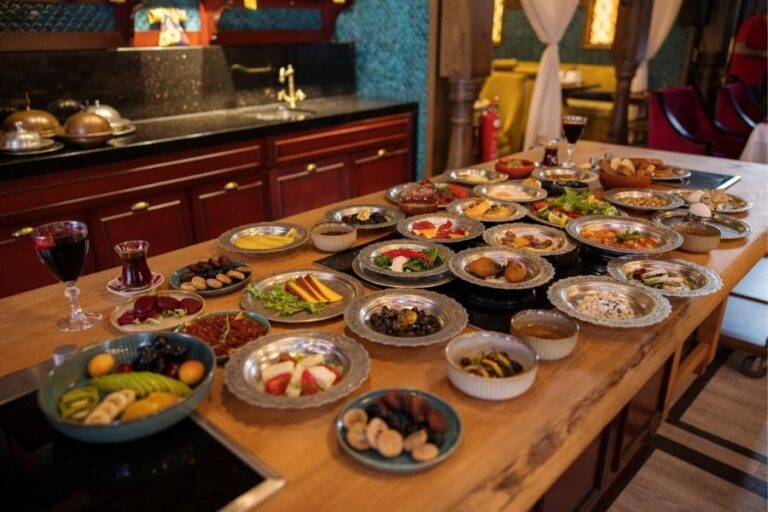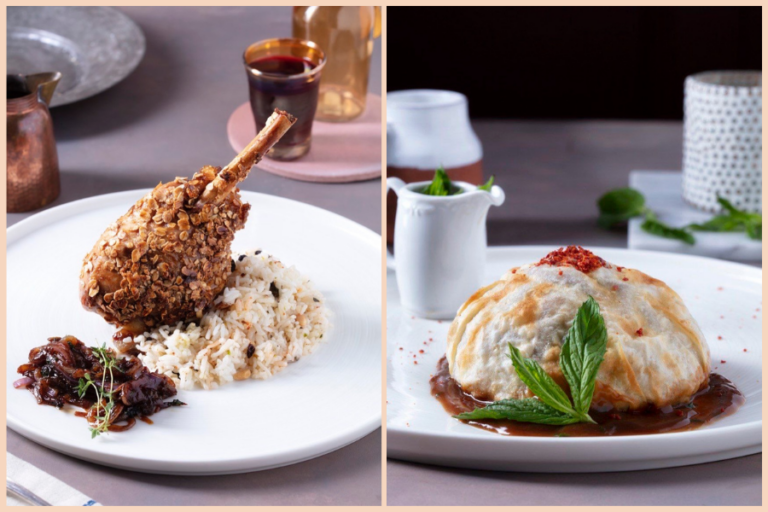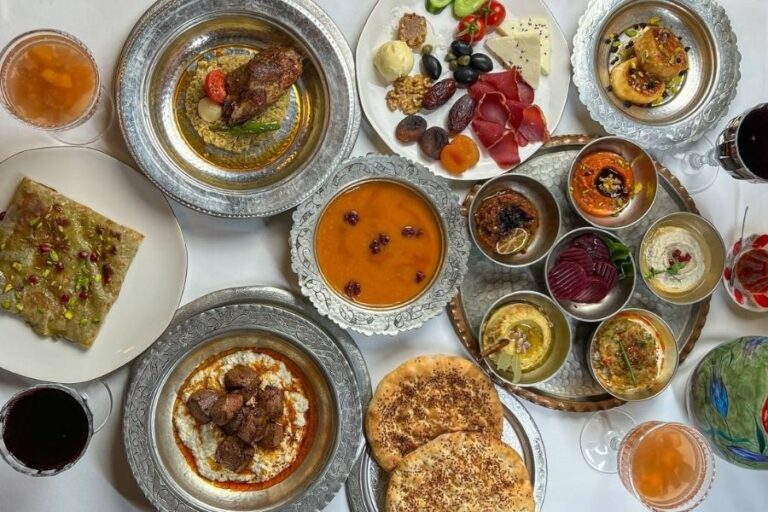


German cuisine is one of the most characteristic cuisines of Europe with its deep-rooted traditions, regional diversity and hearty flavours. German food culture, which stands out with meat dishes, potatoes, bread varieties and the use of simple spices, emphasises naturalness and simplicity. In Germany, food is not only a necessity, but also a form of social sharing and a reflection of traditions.
Main Features of German Cuisine
German cuisine is based on meat, potatoes, cabbage and cereals. Almost every region in the country has meat-based dishes, but each region has its own unique flavours. While pork and sausage varieties are common in southern Germany, fish and seafood are more preferred in the north. German food is usually generously portioned and served with side dishes such as mashed potatoes, boiled vegetables or cabbage. The use of spices is very simple and is usually limited to basic flavours such as salt, pepper and nutmeg. This simple approach highlights the natural flavour of the dishes.
Sausages Indispensable in German Cuisine
Sausages (Würstchen) are one of the first foods that come to mind when you think of Germany. There are more than 1500 different types of sausage in the country and each region has its own sausage recipe.
- Bratwurst: The most well-known type of sausage. It is usually grilled and served with mustard, bread or potato salad.
- Weißwurst: It is a type of sausage made with sweet spices in white colour specific to the Bavarian region. It is traditionally consumed in the morning.
- Currywurst: It is a street food special to Berlin. It is prepared by pouring curry sauce on fried sausage. It is one of the most popular examples of fast-food culture in Germany.
In Germany, sausage is not only a dish, but also a culture. In many cities, sausage events are organised under the name “Wurst Festival” and local producers promote their own recipes.
German Meat Dishes
German cuisine is rich in meat dishes. Mostly pork, veal and chicken are used. Dishes are usually baked in the oven or fried.
- Schnitzel It is prepared by breaded and fried finely pounded meat. It is served with potato salad, lemon wedge and salad. It is very popular both at home and in restaurants.
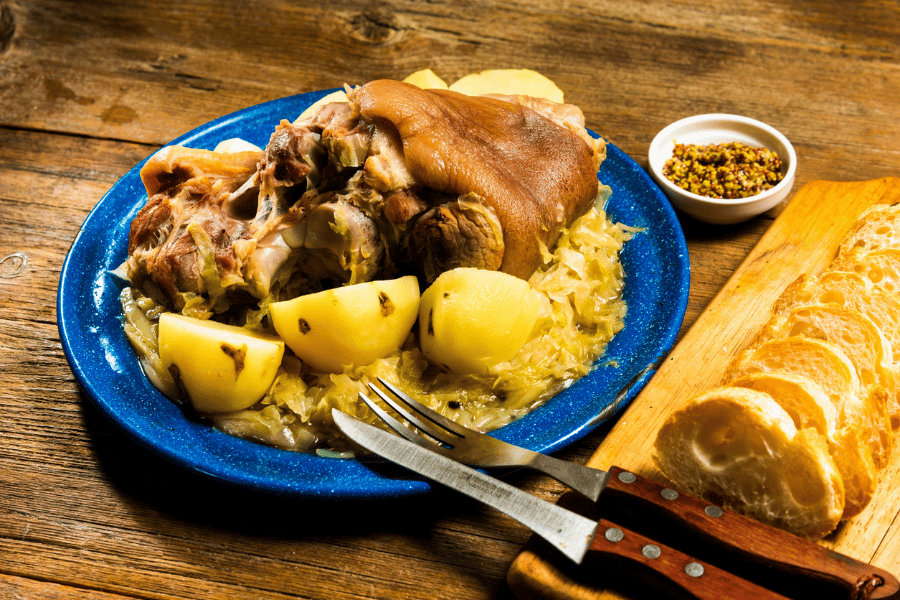
- Schweinshaxe: One of the most recognisable dishes of Bavarian cuisine. The pork shank is cooked in the oven for a long time and prepared to be crispy on the outside and soft on the inside. It is usually served with sauerkraut and potatoes.
- Rinderroulade: It is a traditional dish made by wrapping veal meat with onions, pickles and mustard. As it is cooked slowly, it is very soft and aromatic.
The common characteristic of these dishes is that they are hearty and usually served with a sauce. German cuisine is known for its energetic, nutritious dishes, which are influenced by the cold climate.
German Breakfast Culture
Breakfast in Germany is one of the most enjoyable meals of the day. It is usually simple but filling. There are various breads, cheese, ham, butter, honey and jam on the table.
- Brötchen: The classic breakfast bread from Germany. It is small, round and has a crispy crust. It is consumed with cheese, sausage or butter.
- Muesli: It is very popular among Germans who attach importance to healthy nutrition. It is prepared with ingredients such as oats, yoghurt, dried fruit and almonds.
- Coffee: It is an indispensable drink for breakfast. Germany is one of the leading countries in Europe in terms of coffee consumption.
German breakfast is usually served in a quiet environment, around a table where family members come together. It is not a meal consumed quickly, but a period of time spent with pleasure.
German Desserts and Pastry Tradition
German dessert culture, just like the food, is rich and varies according to the regions. Pastry and fruit desserts are at the forefront.
- Apfelstrudel: This dessert made with apples, cinnamon and raisins is particularly popular in southern Germany. It is made with thin layers of phyllo pastry and served sprinkled with powdered sugar.
- Schwarzwälder Kirschtorte (Black Forest Cake): Made with layers of chocolate cake, cream and cherries, this cake is as delicious as it looks. It is Germany’s best-known dessert.
- Lebkuchen: It is one of the most consumed desserts during the Christmas period. They are soft cookies flavoured with spices such as ginger, cinnamon and cloves.
Desserts are usually accompanied by coffee and are part of German hospitality. Especially patisseries are like meeting points for local people.
German Bread Culture
Germany is one of the world’s leading countries in terms of bread variety. there are over 300 different types of bread. Whole grain, rye or white flour breads are included in every meal. Bread is an essential element of German cuisine, from breakfast to dinner.
Drinks in German Food Culture
When it comes to Germany, it is impossible not to mention the beverage culture. The most recognisable beverage is undoubtedly beer. Each region has its own type of beer:
- Weissbier (Wheat Beer): Especially popular in Munich and the surrounding area.
- Pilsner (Pilsner): The favourite beer of northern Germany.
- Radler: It is a refreshing drink where beer is mixed with lemonade.
Cider (Apfelwein) and wine are also very popular, especially in the Rhineland. Carbonated apple juice and mineral waters are the most popular soft drinks. German cuisine attracts both locals and tourists with its simple but characteristic structure. It is one of the important representatives of European gastronomy with its meat-based dishes, hearty breakfasts, rich dessert varieties and deep-rooted bread culture. Today, modern German chefs preserve traditional recipes and reinterpret them with contemporary touches. In every corner of Germany, whether in small town restaurants or big city restaurants, German food culture continues to bring the flavour heritage of the past to today’s tables.