
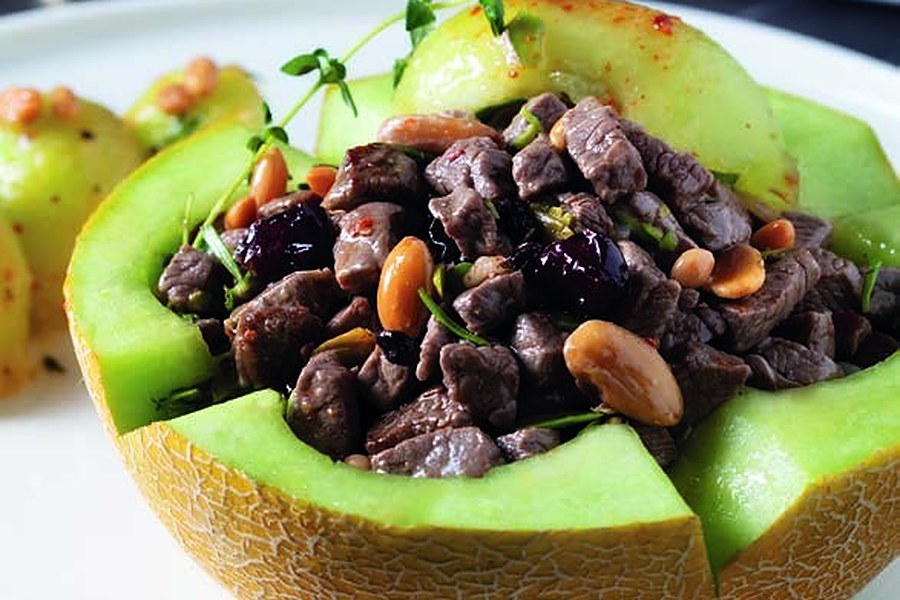
Dolma in the Ottoman palace kitchen meant much more than stuffed vine leaves: cooks filled melons, quinces, apples and sun-dried eggplants with spiced meat and rice, and Deraliye still serves several of these on its menu. The most unusual is Kavun Dolması, a whole melon baked with a filling of beef, rice, nuts and currants. In November the one to look for is the quince version, because quince is in season in Turkey from late autumn into winter.
The idea behind every dolma is simple. A vegetable or fruit is hollowed out, filled and cooked so that the shell and the stuffing flavour each other. What changed in the palace was the choice of shell and the richness of the filling. This guide explains what the word means, how each dolma on the 2026 menu is made, how they differ from wrapped leaves, and how to put them together into one dinner.
What Does Dolma Mean?
The word comes from the Turkish verb doldurmak, “to fill”, so a dolma is simply something filled. Wrapped dishes have their own name, sarma, from sarmak, “to wrap”. In everyday speech many people call stuffed vine leaves dolma as well, but in a Turkish kitchen the difference is clear: peppers, eggplants, tomatoes and fruit are filled, while vine, cabbage and cherry leaves are rolled.
Turkish cooks also divide dolmas by filling. Olive oil dolmas are made with rice, onion, herbs and spices, cooked in olive oil and usually served cold as a meze. Meat dolmas use minced meat with rice and are served hot, often with yoghurt. The palace versions at Deraliye belong to the second group, and they show how far the court pushed the idea, filling sweet fruit with savoury meat. That combination comes from the same thinking we described in our article on why Ottoman chefs cooked meat with fruits.
Stuffed Melon, the Palace Showpiece
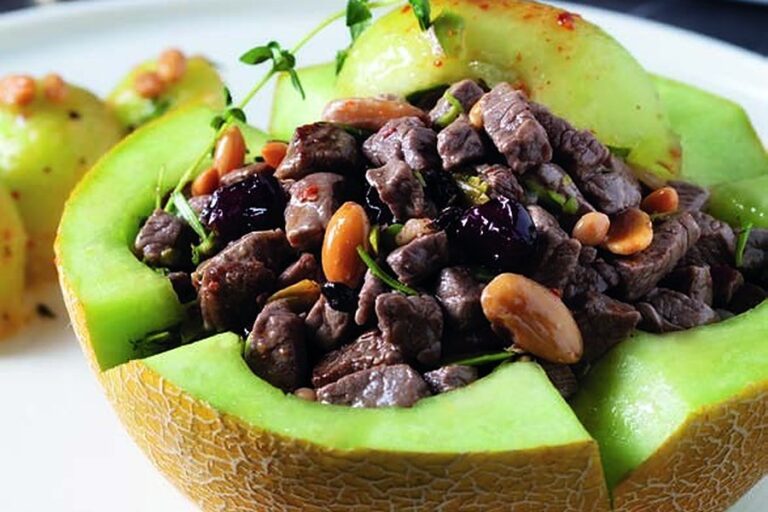
Kavun Dolması is a melon baked whole and stuffed with finely chopped beef, rice, rosemary, fresh thyme, pine nuts, almonds, pistachios and currants. The portion is about 200 grams of filling, served in the melon itself. During baking the flesh softens and gives off its sweetness, so you spoon the warm melon together with the meat and rice.
The taste is hard to predict if you have never had it. The melon is not sugary in the way a fresh slice is; heat makes it mild and slightly floral, close to a cooked squash. The herbs and the nuts keep the filling savoury, and the currants link the two. It is the dish most guests photograph before eating, and the one that best explains why the palace kitchen treated fruit as a cooking vessel.
Apple or Quince Filled with Lamb
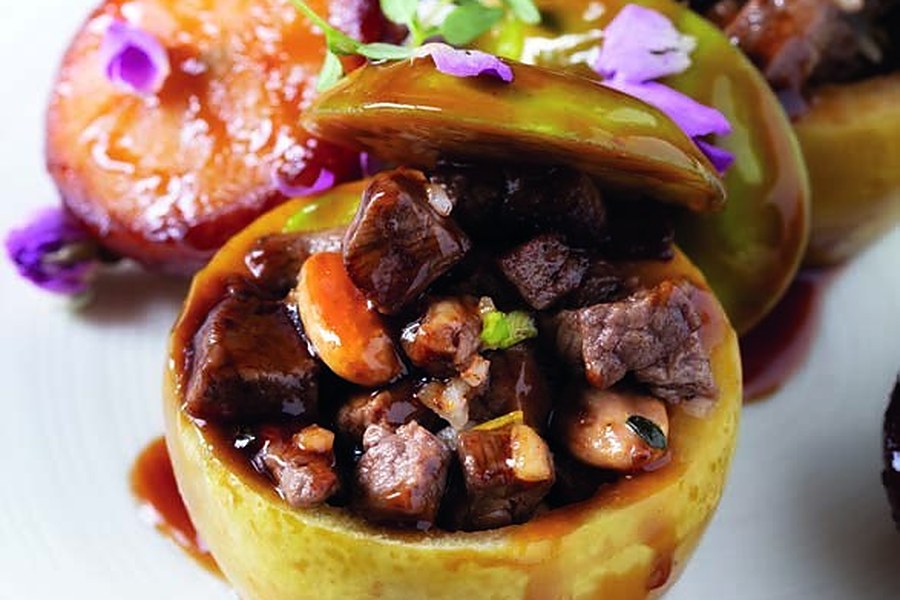
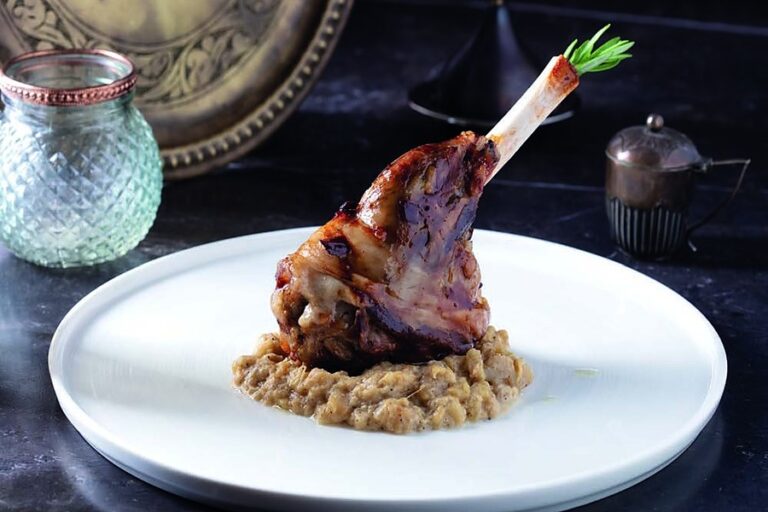
Elma veya Ayva Dolması is a roasted apple or quince filled with minced lamb and beef, rice, spring herbs, pine nuts and currants. Like the melon, it comes as a 200 gram portion. The menu offers either fruit, and in late autumn and winter quince is the one worth asking for.
Raw quince is hard, sour and almost dry, which is why it is rarely eaten fresh. Cooking changes it completely. The flesh turns soft and fragrant, and slow heat can colour it a pale pink, the same change you see in Turkish quince desserts. Inside the filling it gives a gentle sourness that suits lamb very well. Apple is milder and sweeter, a good choice if you are not sure you will like quince. Ayva dolması also appears in our list of forgotten Ottoman dishes you can still taste today.
What Is a Zırh?
The menu says the meat for this dish is chopped with a zırh. A zırh is a large curved blade with a handle at each end, rocked back and forth over the meat. Chopping by hand this way gives a coarser, juicier mince than a grinder, because the meat is cut instead of pressed. Kebab makers in southeastern Turkey still use it, and on the Deraliye menu it also appears in the descriptions of several kebabs.
Dried Eggplant: Summer Kept for Winter
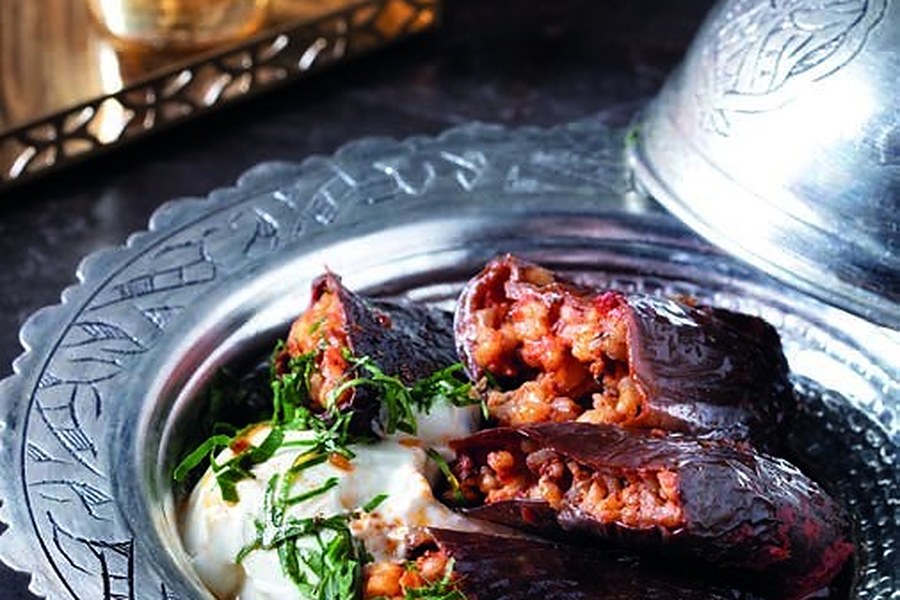
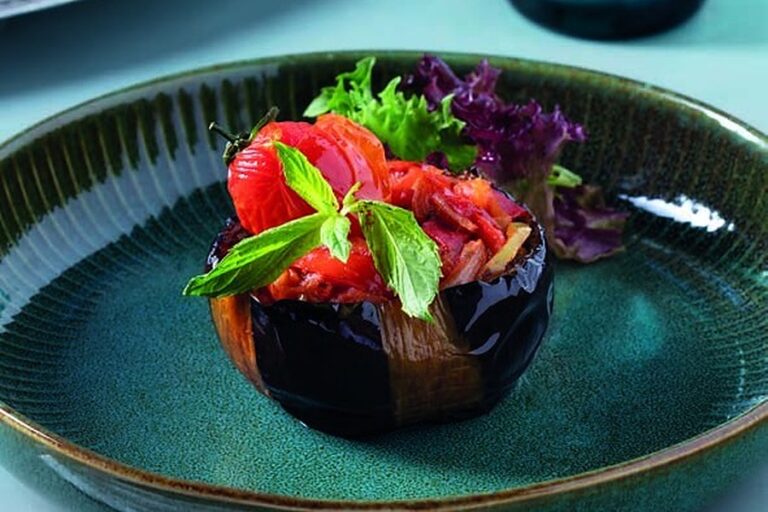
Kuru Patlıcan Dolması is made with eggplants that were hollowed out and dried in the summer sun, then soaked and stuffed with lean ground beef, pepper paste, rosemary and spices. It is served as a hot starter of three pieces with warm yoghurt. Of all the stuffed dishes on the menu, this one fits winter best, because drying was how families kept summer vegetables for the cold months.
In Gaziantep and other cities of the southeast, strings of dried eggplants and peppers still hang on balconies and in markets at the end of summer. Before cooking, the dried shells are softened in hot water until they become flexible again. They keep a slightly chewy texture and a concentrated, almost smoky flavour that fresh eggplant does not have. With yoghurt on the side, three pieces make a filling starter, so share them if you plan a large main course.
Wrapped Leaves and the Hittite Menu
If you want something lighter than the meat-filled dishes, the cold starters include a rolled leaf dish with an Ottoman twist.
Vişneli Yaprak Sarma
Vişneli Yaprak Sarma is rice wrapped in vine leaves and flavoured with cumin, cinnamon, ginger, onion, currants, pine nuts and sour cherries, served as five pieces. The sour cherries give each roll a sharp, fruity finish that plain vine leaf rolls lack. It is part of the cold meze selection we covered in our guide to meze in Ottoman cuisine, and it also appears on the Menu of Sultan.
Cherry Leaves and İskilip Dolma
The Hittite menu, served on Thursday and Friday evenings, has two more surprises. Sour plum-stuffed cherry leaves are rolled with a bulgur and flour filling, cooked in a pot and served with strained yoghurt, sour plum sauce and caramelised onions. İskilip Dolma, named after a town in Çorum, is a dolma in name only: beef is cooked for five hours in a large cauldron with local rice, then the rice is wrapped in cloth, sealed with dough and cooked for three more hours. Our Hittite menu article explains the rest of that evening.
Planning a Dinner Around Stuffed Dishes
Because these dishes sit in different parts of the menu, it is easy to miss that you can build a whole meal around them. A table of two could order like this:
- Start cold with Vişneli Yaprak Sarma, shared.
- Add Kuru Patlıcan Dolması as the hot starter, also shared.
- Order one Kavun Dolması and one Ayva Dolması as mains and swap halfway.
- Finish with something light, such as a fruit plate or Fırın Sütlaç, since the meal will be rich.
The stuffed fruits are portions for one, so a larger group can simply order more of them. If you are coming specifically for the quince or the melon, mention it when you reserve a table at Deraliye, and the team can tell you what is available on the day.
Frequently Asked Questions
Is dolma vegetarian?
It depends on the type. Olive oil dolmas are meat-free, while meat dolmas are not. The melon, apple, quince and dried eggplant versions on this menu all contain meat. The Vişneli Yaprak Sarma filling is listed as rice, spices, currants, pine nuts and cherries, but check with the staff if you follow a strict vegetarian diet.
Is dolma eaten hot or cold?
Meat dolmas are eaten hot and olive oil dolmas and leaf rolls are usually served cold. At the restaurant the stuffed fruits and the dried eggplant come hot, while the vine leaf rolls arrive with the cold starters.
Do these dishes contain nuts?
Yes, most of them do. The stuffed melon contains pine nuts, almonds and pistachios, the apple or quince contains pine nuts, and the vine leaf rolls contain pine nuts. Tell the staff about any nut allergy before you order.
Which dolma should I try first?
Kavun Dolması is the best first choice if you want the most distinctive palace dish. If you prefer something closer to home cooking, the dried eggplant with yoghurt is the most familiar taste.
Do you eat the melon itself?
Yes, the softened melon flesh is eaten together with the filling, and it is half the point of the dish. Only the hard outer rind stays on the plate.