

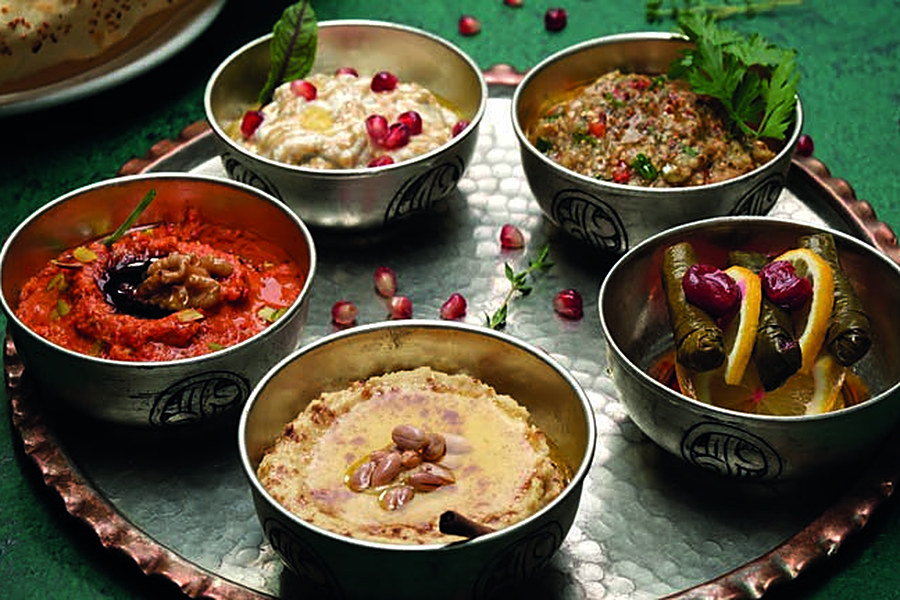
On an Ottoman table, the first plates set down tell you what kind of evening it is going to be. Meze does exactly that at Deraliye Restaurant in Sultanahmet: it slows the meal down, invites conversation to the table and prepares the ground for the main courses to come. In Turkish cuisine meze is not a snack; it is an independent culinary language served in small plates, built on balance, and meant to be shared. This guide looks at the place of meze in Ottoman dining, the unwritten rules of a meze table, and the cold starters on Deraliye’s own menu, one plate at a time.
What Is Meze? The Word and Its Place in Ottoman Dining
The word meze comes from Persian mazze, meaning “taste” or “relish”. In the Ottoman era, meze opened not only drinking tables but also the long banquet tables of the palace. Dishes in the imperial kitchen were rarely served one by one; cold plates arrived together and guests helped themselves as they wished. That is why meze is the clearest expression of the sharing culture at the heart of Ottoman cuisine.
Another defining feature of meze is its bond with the seasons. The months when aubergines are charred, walnuts are pounded and pomegranates are seeded change the character of the whole table. As we explained in our article on Ottoman palace cuisine and culinary culture, the palace kitchen treated the season not as a limitation but as a recipe guide. Meze is the most flexible field of application for that idea.
The meze plates that reach the table at Deraliye today follow the same logic: each one can stand alone, but they work better together. A proper meze spread contains sour, spicy, rich, refreshing and dense flavours all at once, and none of them overwhelms the others.
The Unwritten Rules of a Meze Table
A good meze table is never accidental. A handful of rules have settled over centuries — nobody writes them down, yet everyone follows them:
- Balance: Two rich, oily plates are never placed side by side. A tahini-based dish is always answered by something acidic and refreshing.
- Texture: Next to smooth purees there must be something to chew — a vine leaf wrap, a stuffed vegetable or a salad does the job.
- Colour: A meze table is eaten with the eyes as well. Red pepper paste, a white yoghurt-based plate and green herbs are arranged together for a reason.
- Order: Cold plates come first, hot starters follow. That order sets the pace of both the stomach and the evening.
- Sharing: Meze plates belong to the table, not to a person. Everyone reaches to the centre, which is why guests count varieties rather than portions.
As we noted in our guide to food culture and etiquette in the Ottoman Empire, table order was a matter of courtesy in Ottoman society. Meze is that courtesy made visible: nobody is locked into a personal plate, and the table becomes common ground.
Humus: The Palace Reading of the Chickpea
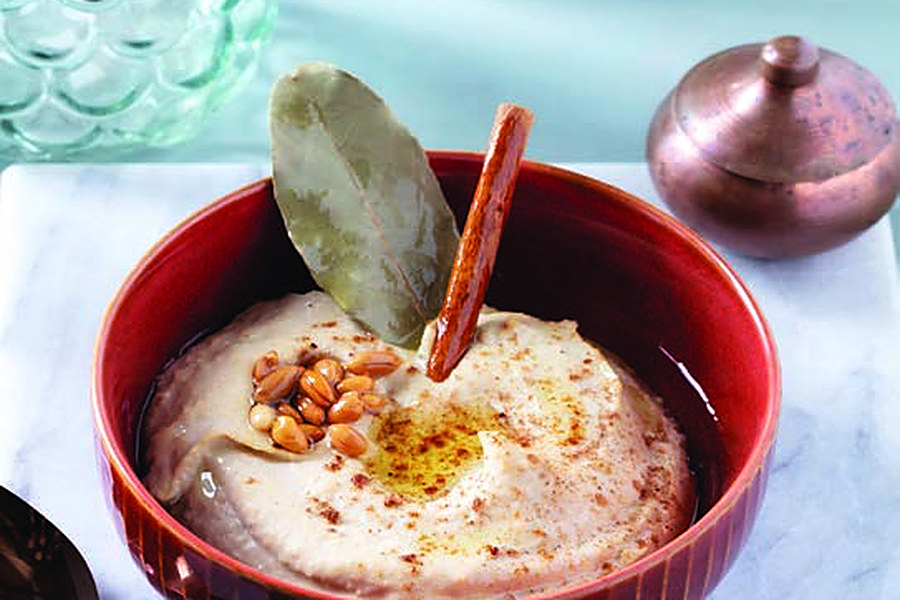
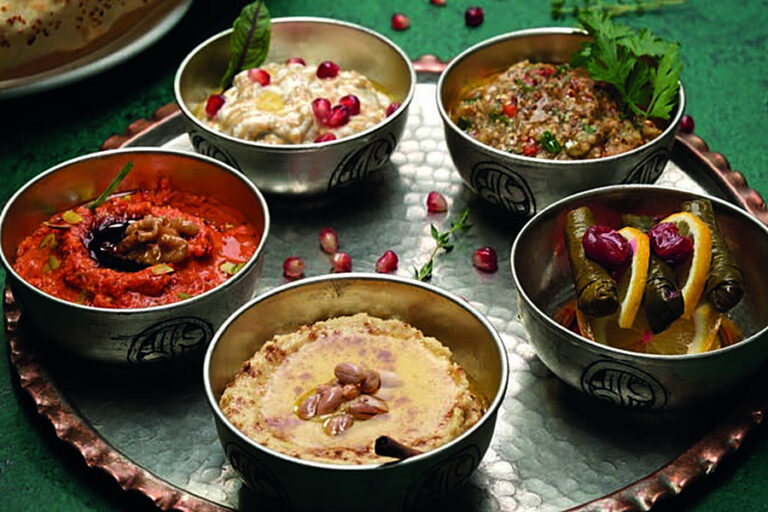
The humus on Deraliye’s meze menu sits some distance from the version most people know from a supermarket shelf. The recipe is drawn from a 1469 banquet notebook — the manuscript published by Semih Tezcan as “A Banquet Notebook” — and reproduces a particular chickpea kocbasi paste. The chickpeas are cooked slowly and crushed, then worked with tahini, lemon, garlic and black pepper, and finished with currants and cinnamon.
That detail matters: cinnamon and currants turn the dish from a Levantine spread into an Ottoman meze. In the palace kitchen, sweet and savoury regularly met on the same plate; our article on why Ottoman chefs cooked meat with fruits explains how the same instinct shaped the main courses. Humus is that logic applied at meze scale.
Serving temperature is part of the craft too. The plate does not arrive straight from the refrigerator; it is served at room temperature so that the oil in the tahini and the aroma of the olive oil open up on the palate.
Muammara and Acili Ezme: Two Faces of the Red Pepper
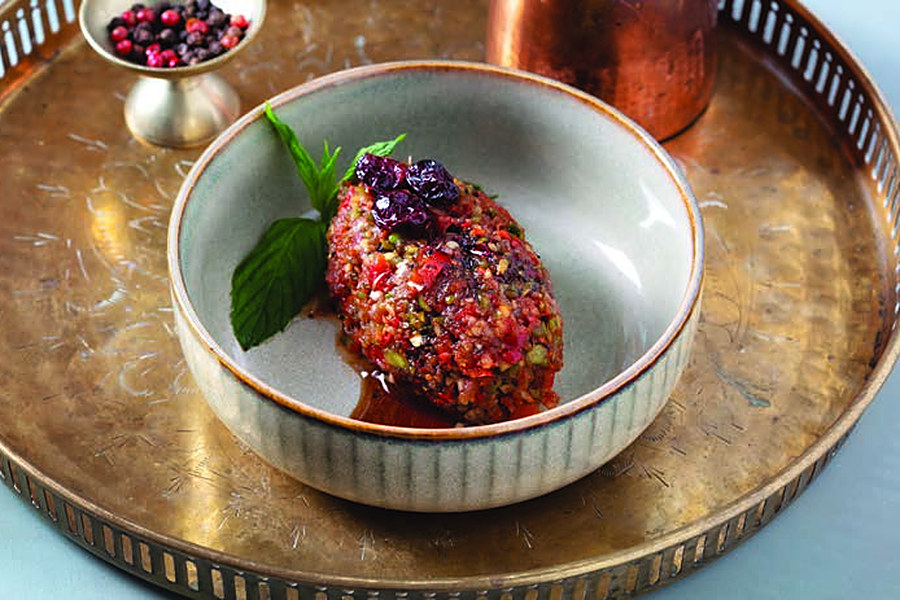
No pair demonstrates better how one ingredient can produce two entirely different meze plates. Muammara is a dense paste of walnuts, red pepper paste, breadcrumbs and spices; it leans sweet, deepened by pomegranate molasses. The oil in the walnuts keeps it on the palate for a long time, which is why it asks for nothing more than bread beside it.
Acili ezme is its opposite: red pepper, onion, garlic, cucumber and pepper paste, freshly chopped and vividly alive. Where muammara weighs the table down, acili ezme wakes it up. Placed together, each is the antidote to the other.
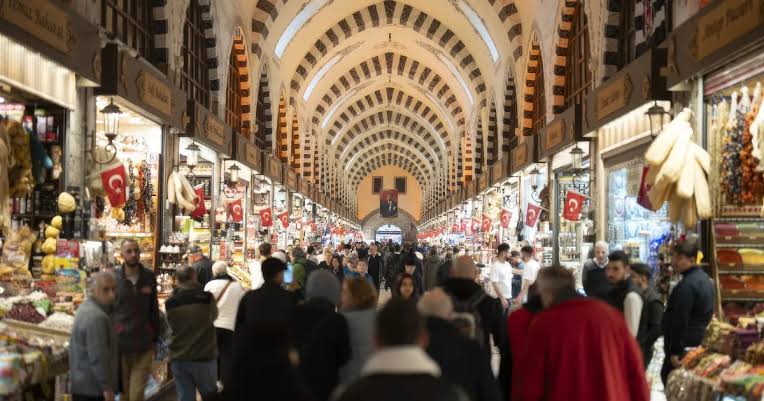
The peppers and spices behind both of these plates connect directly to Istanbul’s spice trade. In our guide to the Egyptian Spice Bazaar we looked at ingredients such as pul biber, sumac and pomegranate molasses — the backbone of any meze kitchen in this city.
Two Faces of the Aubergine: Baba Ganoush and Mutabbal
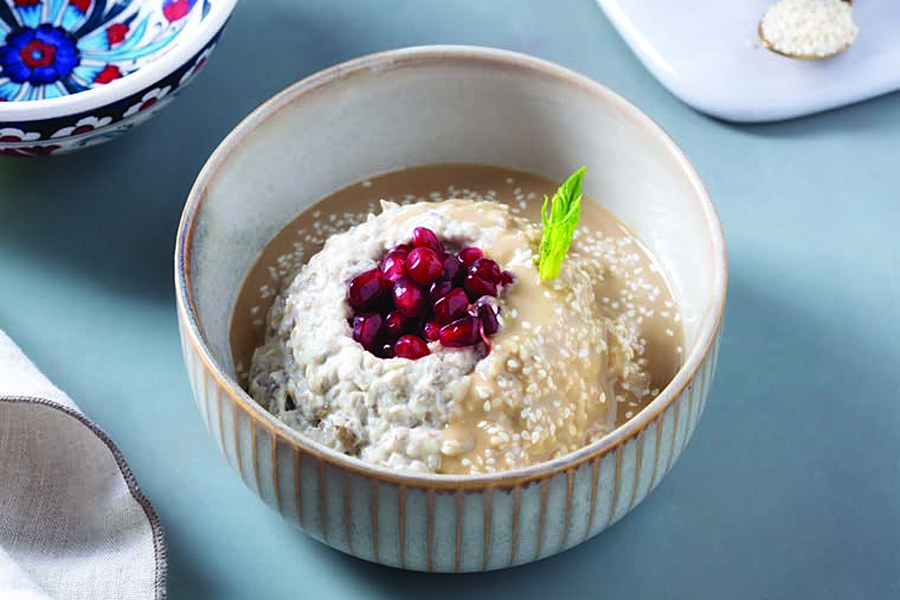
In Turkish cuisine the aubergine is meze’s most loyal ingredient. On Deraliye’s meze menu it appears in two separate plates, and both rest on the same technique: charring over open flame.
Baba ganoush blends the charred aubergine with yoghurt, garlic and olive oil; the coolness of strained yoghurt softens the smoke. Mutabbal takes the same charred flesh and brings it together with tahini instead; with lemon juice and garlic the result is sharper and closer to a true puree. Pomegranate seeds scattered over the top add both acidity and a small crunch.
The difference between the two is essentially technical: dairy dominates the first, sesame the second. Ordering both on one table is not indecision — it is reading the table correctly, because tasting two interpretations of the same vegetable side by side is one of the clearest lessons Ottoman cuisine can offer.
Cherry Leaf Wrap and Tabbule: Fruit Meets Grain
Among Deraliye’s cold starters, the plate guests ask about most often is the cherry leaf wrap, visneli yaprak sarma. Rice seasoned with cumin, cinnamon, ginger, onion, currants and pine nuts is rolled in vine leaves, and sour cherries join during cooking to give the wrap an unexpected tartness. This is a completely different meze from the familiar olive-oil vine leaf roll, and it comes straight from palace kitchen manuscripts.
Tabbule is the freshest plate on the table: fine bulgur, generous parsley, mint, spring onion, lemon juice, olive oil and pomegranate seeds. Among heavier plates it cleans the palate and prepares it for the next taste. At Deraliye tabbule is usually brought out in proportion to the number of guests; it is a shared plate rather than a single serving.
Considered together, these two dishes make the logic of meze obvious: one is spiced, dense and sweet-sour, the other plain, herbal and acidic. Those contrasts set the rhythm of the whole meal.
Hot Starters: Sailor’s Roll Patty with Honey and Arefe Kibbeh
The hot starters that follow the cold plates form the second act of the table. Balli gemici boregi, the sailor’s roll patty, is filled with various Turkish cheeses, fried, then finished with honey and currants; salty cheese meeting honey is one of the best-loved contrasts in Ottoman cooking. Arefe kibbeh is a stuffed meatball of minced meat, almonds, pistachios, currants and rosemary.
For guests who prefer seafood, grilled octopus and shrimp casserole with garlic sauce also belong to this section. These plates raise the temperature of the table before the main courses arrive; in the grammar of meze, the move from cold to hot is how both the appetite and the palate are made ready.
What to Drink with Meze
Drink choice on a meze table cannot be separated from the plates. The classic pairing is raki, whose aniseed edge cuts through tahini and charred vegetables. If the table is alcohol-free, Ottoman cuisine has its own answer ready: sherbet. The house-made sherbet served at Deraliye works surprisingly well alongside meze thanks to its fruit and spice concentration.
Ayran, fresh pomegranate juice and homemade lemonade also suit the table. Pomegranate juice is particularly good with tahini and walnut plates such as muammara and mutabbal, where acidity balances fat. Turkish coffee, on the other hand, belongs at the very end of the evening rather than to the meze stage.
How to Build a Meze Table in Sultanahmet
The question first-time guests ask most often at Deraliye is simple: “How many kinds of meze should we order?” The practical answer is two varieties per person plus at least one hot starter for the table. For four guests, five or six cold plates and two hot starters make a generous opening without overshadowing the main course.
For those who find it hard to choose, there is the mixed appetizer plate: at least five varieties presented together on a copper tray and set at the centre of the table. In the historic fabric of Sultanahmet, within walking distance of Hagia Sophia and the Blue Mosque, the arrival of that tray sets the tone of the evening. In our answers to what to eat in Sultanahmet, a meze table is always near the top of the list.
Guests looking for the complete Ottoman experience can start with the Ottoman tasting menu, which opens with seven cold meze varieties and carries the table step by step all the way to the Goose Kebab.
Frequently Asked Questions
Are meze and starters the same thing?
Not exactly. Every meze is a starter, but not every starter is a meze. Meze describes small, usually cold plates meant for sharing; a soup or a single hot plate served per person counts as a starter without belonging to the meze family.
Are there vegetarian meze options?
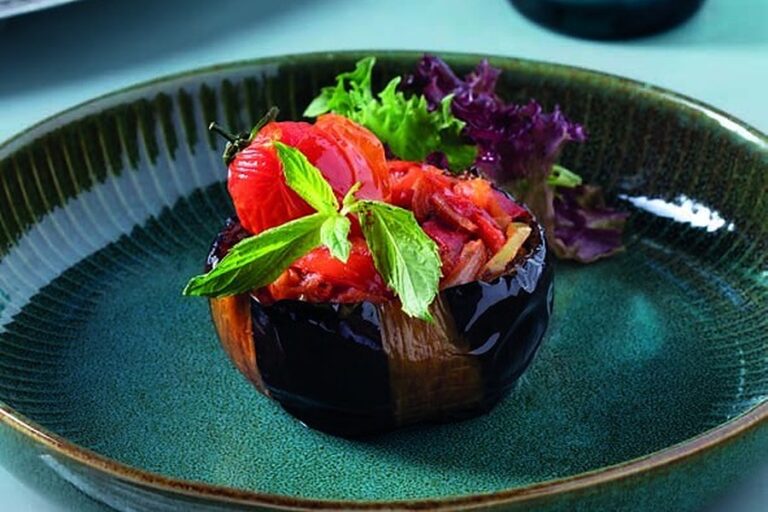
Yes. Humus, muammara, baba ganoush, mutabbal, acili ezme and tabbule contain no meat. Deraliye’s vegetarian main courses also include Imam Bayildi, vegetarian piruhi and the vegetarian testi kebab.
How many guests does a meze table need?
The logic of meze works best with larger tables, but it can be built for two just as well. Three or four cold plates and one hot starter are enough for a couple.
Should meze plates be cleared before the main course?
Ideally not. In Ottoman table order the cold plates stay until the main course arrives and remain on the table alongside it.
Conclusion: Meze Is Not the Entrance, It Is the Meal
On an Ottoman table, meze is not a way of passing time until the main course. It sets the rhythm of the evening, draws guests closer to one another and shows most openly what a kitchen is capable of. From the cinnamon in the humus to the walnuts in the muammara, from the smoke of the baba ganoush to the pomegranate in the tabbule, every plate is the result of a preference distilled over centuries.
If you would like to build a meze table in the heart of the historic peninsula, the cold starters section of Deraliye Restaurant in Sultanahmet was designed for precisely that. When you make your reservation you can also leave the number of varieties to our service team and let the evening unfold in its proper order.