

Ottoman cuisine is often remembered for its kebabs, lamb and goose, yet some of its most celebrated dishes contain no meat at all. Eggplants slowly cooked in olive oil, delicate dumplings filled with cheese and herbs, and vegetables sealed in a clay pot have been part of this kitchen for centuries. At Deraliye Restaurant in Sultanahmet, the vegetarian main courses are not a compromise added at the end of the menu; they are palace and Anatolian classics in their own right. This guide introduces İmam Bayıldı, Piruhi and the Vegetarian Testi Kebab, and explains how to build a complete meat-free Ottoman evening at our tables.
A Vegetarian Tradition Inside Ottoman Cuisine
It may come as a surprise, but the Ottoman table offered many dishes that today we would call vegetarian. The empire was home to many communities, and their calendars shaped its kitchen. Long fasting periods in the Orthodox Christian and Armenian traditions, when meat was avoided for weeks, encouraged cooks across Istanbul to perfect vegetable dishes cooked in olive oil. These dishes, known in Turkish as zeytinyağlılar, are typically cooked gently, left to cool and served at room temperature, so the flavours have time to settle.
Seasonality also played a role. Ottoman cooks followed the rhythm of the markets: broad beans and artichokes in spring, eggplants, peppers and tomatoes in summer, pumpkins and quinces in autumn. Meat was valuable and often reserved for feasts, while vegetables, grains, legumes and dairy filled the everyday table. The palace kitchens of Topkapı, with their specialised cooks and generous supplies, refined many of these humble recipes into dishes worthy of the sultan’s table. Our article on the healing flavors of the Ottoman Empire shows how vegetables, herbs and spices were valued not only for taste but also for wellbeing.
Today, travellers who follow a vegetarian diet often worry that a traditional Turkish restaurant will leave them with only salads. At Deraliye, the opposite is true: the menu includes three dedicated vegetarian main courses, a wide range of meat-free cold starters and desserts that close the meal in classic Ottoman style.
İmam Bayıldı: The Dish That Made the Imam Faint
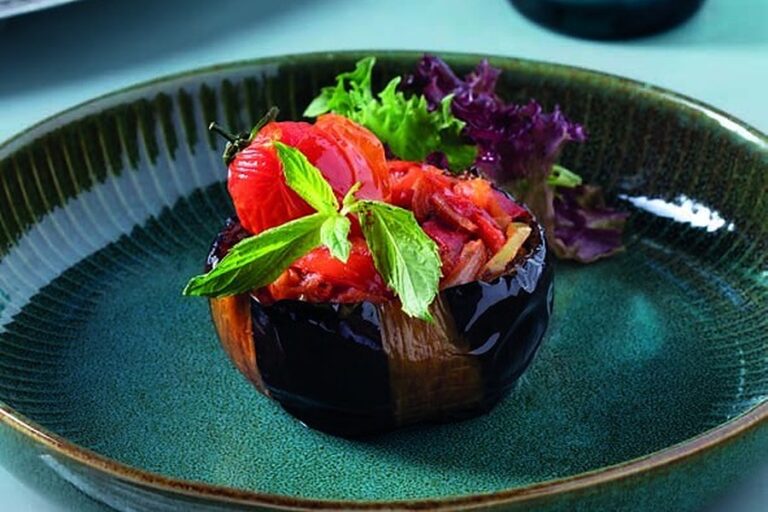
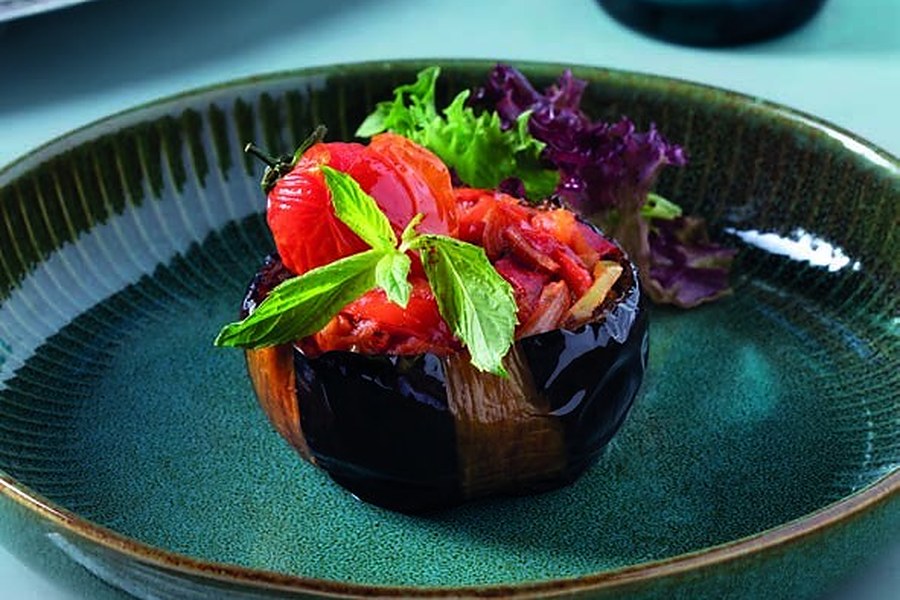
Few dishes have a more memorable name than İmam Bayıldı, which literally means “the imam fainted”. Whole eggplants are partly peeled in stripes, fried or roasted until soft, then filled with onions, tomatoes, garlic and parsley that have been slowly cooked in generous amounts of olive oil. The eggplants are then baked or simmered until the filling and the vegetable become one silky, deeply flavoured dish.
There are several stories about the fainting imam. In one version, he fainted from pleasure the first time he tasted the dish. In another, more humorous version, he fainted when he learned how much expensive olive oil his wife had used to prepare it. Whichever story you prefer, both say something true about the recipe: it depends on patience and on good olive oil.
At Deraliye, İmam Bayıldı is served as a vegetarian main course with rice on the side. The eggplant arrives whole and glossy, crowned with its tomato and onion filling and fresh herbs, so it is substantial enough to be the centre of the meal rather than a side dish. The rice is prepared with butter, so please mention it if you follow a vegan diet and our team will advise you.
Piruhi: Delicate Dumplings with Tulum Cheese and Walnuts
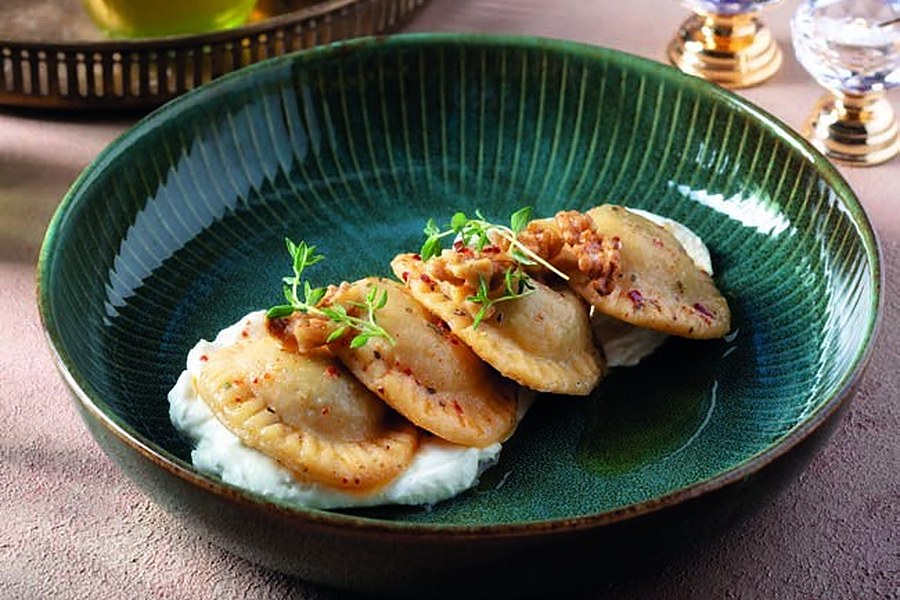
Piruhi is a half-moon dumpling with a long history in the kitchens of Istanbul and Anatolia. It is a close relative of the small Turkish mantı, but larger and more generous, and its name is often compared with the pierogi of Eastern Europe, a reminder of how recipes travelled along trade routes. In Ottoman Istanbul, different communities prepared piruhi with cheese, meat or seasonal fillings.
The vegetarian piruhi at Deraliye is filled with tulum cheese, a crumbly and aromatic cheese matured in a skin, mixed with onions and parsley, and wrapped in a thin, unleavened dough. After cooking, the dumplings are served on yogurt and sprinkled with walnuts toasted in butter. The combination of tangy yogurt, salty cheese and nutty butter is one of the most comforting flavours on our menu. A portion contains four pieces, which makes it a satisfying main course, but it is also an excellent dish to share at the centre of the table.
Guests who enjoy piruhi may also notice its seafood cousin in the Menu of Sultan, where handmade piruhi is stuffed with seasonal fish. You can read more about that tasting experience in our article on what makes Deraliye’s Ottoman tasting menu unique.
Vegetarian Testi Kebab: Cooked in a Clay Pot
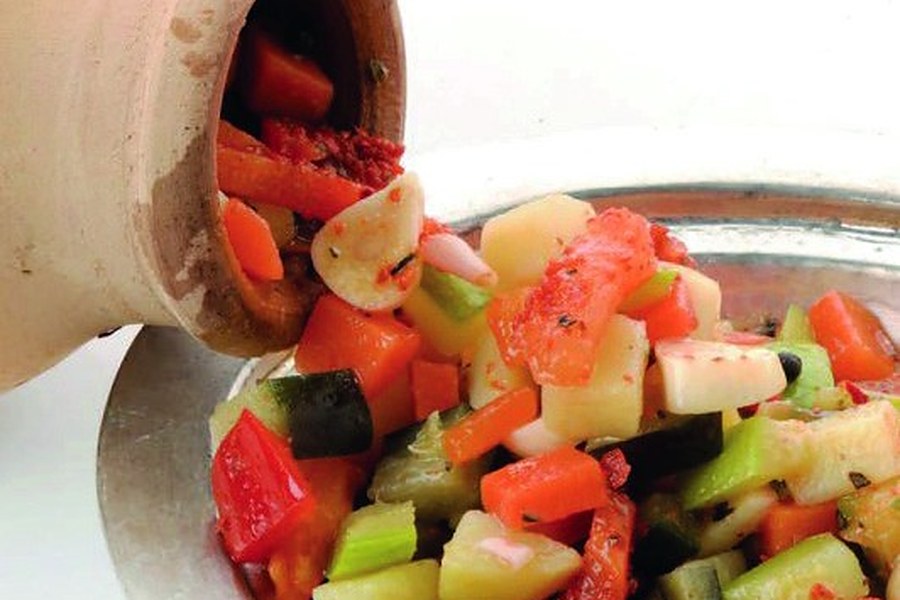
Testi kebab is one of the most theatrical dishes of Anatolian cuisine. Traditionally associated with Central Anatolia and Cappadocia, it is cooked inside a sealed clay jug, the testi, which is placed in a hot oven or among embers for hours. The clay keeps moisture inside, so the ingredients steam and stew in their own juices, and the jug is opened at the table, releasing a cloud of aromatic steam.
Deraliye prepares two versions. The classic Testi Kebab with lamb, garlic, red pepper, fresh thyme and pepper paste appears among the Great Dishes of the Palace. The vegetarian Testi Kebab follows the same traditional cooking method, but replaces the meat with a colourful mix of seasonal vegetables such as zucchini, peppers, tomatoes and onions. When it is poured from the clay pot onto the plate, the vegetables keep their shape and colour while absorbing the concentrated flavour that only slow cooking in clay can give.
Because the dish is cooked in a closed pot, it is naturally light, juicy and full of flavour without needing heavy sauces. It is an ideal choice for guests who want a warm, hearty main course on an autumn or winter evening.
Building a Vegetarian Ottoman Evening at Deraliye
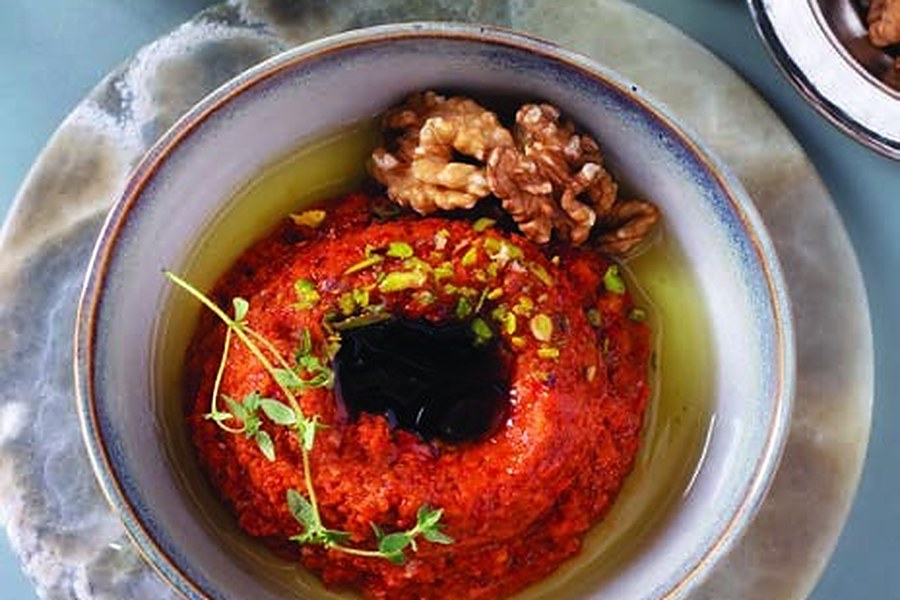
A memorable dinner is more than a single plate. Here is how you can build a complete vegetarian menu from our à la carte selection:
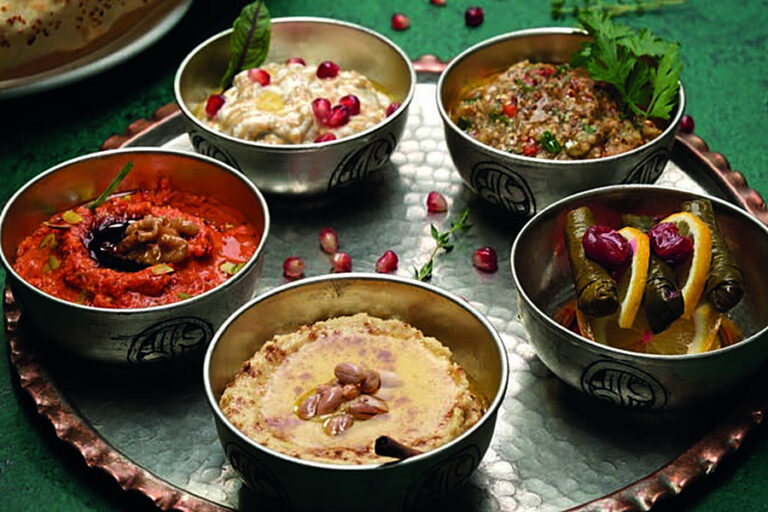
- Cold starters to share: Humus with cinnamon and currants, muammara with walnuts, baba ganoush, mutabbal, acılı ezme, tabbule and vişneli yaprak sarma (grape leaves stuffed with rice, currants and sour cherry) are all prepared without meat. Our guide to meze and cold starters at Deraliye describes each of them in detail.
- A warm starter: Ballı Gemici Böreği, a crisp pastry filled with Turkish cheeses and served with honey and currants, is a sweet and savoury favourite.
- A salad: The shepherd salad with pomegranate syrup brings freshness to the table.
- The main course: Choose İmam Bayıldı, Piruhi or the Vegetarian Testi Kebab, or order two and share.
- Dessert: Finish with fırın sütlaç (baked rice pudding), levzine (an almond halva), katmer or baklava.
Please note that some dishes on the menu that look vegetable-based, such as the stuffed dried eggplant among the hot starters, contain minced meat. The Spaghetti Napoliten is meat-free, but as our menu itself notes, it is not part of Ottoman cuisine and was added for families with children. If you are unsure about any dish, simply ask: our team knows the ingredients of every plate and will guide you.
Vegetarian, Vegan and Allergies: What to Know
Deraliye’s three vegetarian main courses contain no meat or fish, but several of them include dairy products such as butter, yogurt or cheese, and some contain gluten, nuts or eggs. Piruhi, for example, contains flour, yogurt, butter, cheese, walnuts and eggs. Guests following a strict vegan diet should mention it when ordering, so the kitchen can advise which dishes can be adapted.
Our menu lists allergens under each dish, and geographically indicated products are used wherever possible. When you make your reservation, you can also add a note about dietary requirements; this helps our team prepare before you arrive.
Frequently Asked Questions
Does Deraliye have vegetarian main courses?
Yes. The menu has a dedicated section of vegetarian main courses: İmam Bayıldı with rice, vegetarian Piruhi with tulum cheese, and the Vegetarian Testi Kebab.
Is the Menu of Sultan suitable for vegetarians?
The tasting menu includes meat and seafood courses such as goose kebab and seafood piruhi. Vegetarian guests usually prefer to build their own menu from the à la carte selection; please ask our team for advice.
Are the cold starters vegetarian?
Most cold starters, including humus, muammara, baba ganoush, mutabbal, acılı ezme and tabbule, are meat-free. The lamb neck with thyme is the exception.
Can vegan guests dine at Deraliye?
Several dishes are naturally free of animal products, while others contain butter, yogurt or cheese. Let us know when booking and the kitchen will suggest suitable options.
Conclusion: The Green Side of the Palace Table
The Ottoman kitchen was never only about meat. Its olive oil dishes, cheese-filled dumplings and clay-pot vegetables show a cuisine that respected the season, the market and the many communities of Istanbul. At Deraliye Restaurant in Sultanahmet, these vegetarian classics stand proudly next to the palace kebabs. If you are exploring the city’s lesser-known flavours, our article on forgotten Ottoman dishes you can still taste today is a good next read. Reserve your table, order İmam Bayıldı or a plate of piruhi, and discover that a meat-free Ottoman dinner can be just as rich as any feast.