

In the Ottoman world, a meal did not begin with bread or with meat. It began with a bowl of soup. At Deraliye Restaurant in Sultanahmet, that old habit is still part of the evening: before the palace main courses reach the table, a warm soup prepares the palate, settles the conversation and sets the pace for everything that follows. This guide looks at why soup held such an important place in Ottoman life, what makes lentil soup and tarhana two pillars of Anatolian cooking, and how the soups on Deraliye’s own menu carry that heritage into the present day.
Why Soup Opened the Ottoman Table
The Turkish word for soup, çorba, is usually traced to the Persian shorba, a combination of the words for “salty” and “stew”. The word travelled across Anatolia, the Balkans and the Middle East together with the dish, and wherever the Ottomans settled, soup came to mean the first and most essential part of a meal. A house could run out of many things, but it was expected never to run out of soup.
For centuries, soup was not only a starter but also the morning meal. Before coffee became widespread, many Ottoman households began the day with a bowl of soup and a piece of bread. Travellers who visited Istanbul in the sixteenth and seventeenth centuries noted with some surprise that soup was eaten at dawn, at noon and in the evening. A hot soup was considered the most honest way to give the body strength before a working day, and in the cold months of the year it was simply the most sensible food on the table.
The palace was no exception. In the kitchens of Topkapı, soups were prepared every day for the sultan, the household and the hundreds of people who lived and worked inside the palace walls. Records of the imperial kitchen list soups made with rice, wheat, lentils, chickpeas, yogurt, meat stock and seasonal vegetables. If you are curious about the wider picture, our article on what Ottoman sultans ate in Topkapı Palace describes the daily rhythm of the palace kitchen in more detail.
Soup, the Janissaries and the Public Kitchens
Few dishes have shaped the vocabulary of an empire the way soup did. In the Janissary corps, the officer at the head of a company was called the çorbacı, literally “the soup maker” or “the one who serves the soup”. The large copper cauldron, the kazan, was the symbol of the unit’s unity; sharing soup from the same cauldron meant sharing the same fate. When the Janissaries wanted to show their discontent, they famously overturned their cauldrons and refused the soup sent from the palace, a gesture that every sultan understood immediately.
Soup also stood at the centre of Ottoman charity. The great mosque complexes of Istanbul included public kitchens known as imaret, where soup and bread were distributed every day to students, travellers and the poor. A bowl of soup from an imaret was a promise that no one in the city would go hungry. This tradition of hospitality is one of the reasons why the dish still carries such emotional weight in Turkey today: it is food for the family, for the guest and for the stranger alike.
The same spirit lives on during Ramadan, when the fast is traditionally broken with water or a date and then a warm soup, before the rest of the iftar meal is served. You can read how this ritual comes alive in Sultanahmet in our article on the magic of Ramadan and iftar at Deraliye.
Lentil Soup: The Most Beloved Bowl in Turkey
If there is one soup that unites the whole country, it is lentil soup, mercimek çorbası. Lentils are among the oldest cultivated crops of Anatolia and Mesopotamia, grown in this region for thousands of years before the Ottomans. Red lentils cook quickly, break down into a velvety texture and need very little to become a complete dish: onion, a little carrot or potato for body, good stock or water, butter and patience.
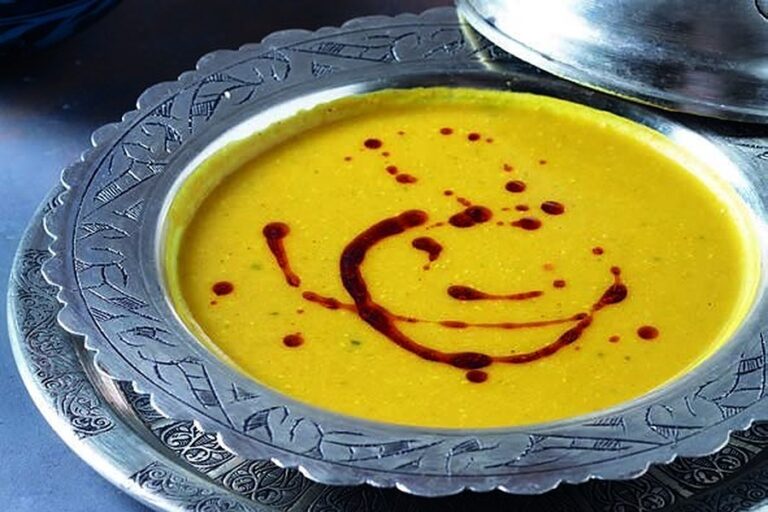
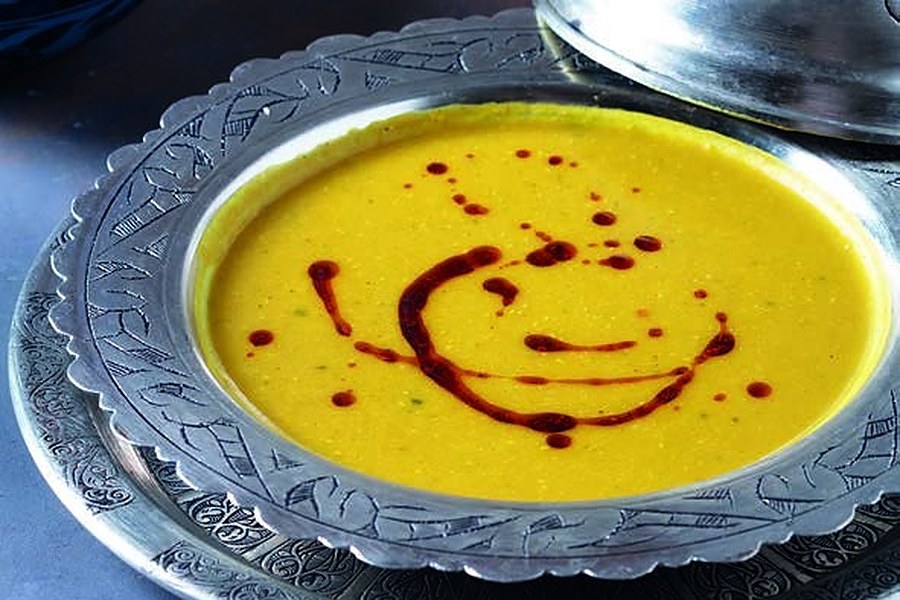
At Deraliye, the lentil soup is served in the classic Istanbul way. It arrives smooth and golden, with a slice of lemon on the side and a lightly spiced butter sauce poured over the top. That last touch matters more than it seems. Butter warmed with red pepper flakes adds a gentle heat and a glossy red pattern to the surface, while a squeeze of lemon lifts the earthy flavour of the lentils. Many guests tell us that this simple bowl reminds them of home, and that is exactly what a good lentil soup should do.
A few tips for enjoying it the Turkish way:
- Squeeze the lemon in before you start, then stir gently so the spiced butter spreads through the bowl.
- Tear a piece of fresh bread and use it to finish the last spoonfuls; nobody will mind.
- If you prefer more heat, ask the team for extra red pepper flakes on the side.
Tarhana with Sour Cherry: A Palace Twist on an Anatolian Classic
Tarhana is one of the cleverest inventions of Anatolian home cooking. A mixture of flour or cracked wheat, yogurt, tomatoes, peppers, onions and herbs is left to ferment, then dried in the sun and crumbled into a powder that keeps for months. In late summer, villages across Anatolia still prepare tarhana together, so that the family has a ready base for soup throughout the winter. A spoonful of the dried mixture, stirred into hot water or stock, becomes a sour, warming and deeply satisfying meal within minutes.
There is a well-known legend about its name. According to the story, Sultan Selim I stopped at a poor family’s house during a campaign and was served a modest soup. He liked it so much that he asked what it was; the family replied that it was simply the food of a “dar hane”, a humble home, and the name tarhana was born. Historians treat this story as folklore, yet it captures something true: tarhana moved from village kitchens into the palace. As the note on our own menu recalls, tarhana entered the palace records in the early sixteenth century, during the reign of Yavuz Sultan Selim, before his Egyptian campaign.
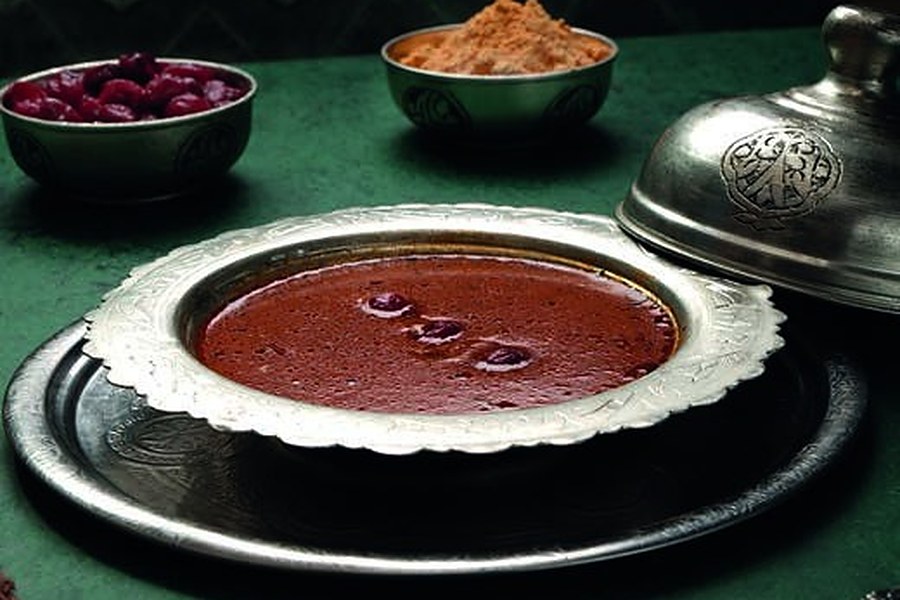
Deraliye’s version takes this humble soup and gives it a palace accent. Our tarhana soup is seasoned with sour cherry, yogurt and spices, so that the natural tang of the fermented base meets the bright, fruity acidity of the cherries. The result is a deep red, aromatic bowl that surprises guests who know tarhana only as a plain winter soup. Pairing meat, grains and dairy with fruit was one of the signatures of Ottoman palace cooking, a theme we explored in depth in our article on why Ottoman chefs cooked meat with fruits.
Hattusa Soup: A Taste from the Hittite Table
The story of Anatolian soup is much older than the Ottomans. On Thursday and Friday evenings, Deraliye serves a special Hittite menu inspired by recipes and ingredients recorded on clay tablets more than three thousand years ago. One of its courses is the Hattusa Soup, named after the Hittite capital in central Anatolia.
Hattusa Soup is built on a local milk tarhana, made by cooking whole wheat in milk and then breaking it into small pieces. This base is simmered for a long time over low heat together with mutton and salt, and finished with butter, cumin, thyme, sage, mustard, mint, green onion and garlic. Tasting it next to the lentil soup and the sour cherry tarhana is a small lesson in culinary history: the same idea of grain, dairy and slow cooking has fed Anatolia for millennia, each era adding its own herbs and techniques. You can learn more about this experience in our article on the Hittite menu at Deraliye. Please note that the Hittite menu is served with a limited reservation, so it is best to book in advance.
How to Enjoy Soup at Deraliye
Soup at Deraliye is not an afterthought; it is the first chapter of the meal. Here are a few suggestions for building your evening around it:
- Start light, then share: Order a lentil or tarhana soup for yourself and a selection of cold starters for the table. Our guide to meze and cold starters at Deraliye will help you choose.
- Contrast the two soups: If you are dining as a couple, order one lentil and one tarhana and swap halfway. One is smooth and comforting, the other tangy and fruity.
- Think about the main course: A soup pairs naturally with palace classics such as lamb shank, Ali Nazik kebab or the famous goose kebab, all of which appear on our menu.
- Tell us about allergies: Both of our soups contain gluten and dairy products. Our team will gladly guide you if you have dietary requirements.
Soup for the Autumn and Winter Months
As the days grow shorter in Istanbul, the streets of Sultanahmet fill with the smell of roasted chestnuts and the first cool winds from the Bosphorus. This is the season when a bowl of soup feels most at home. After a day spent walking between Hagia Sophia, the Blue Mosque and the Basilica Cistern, a warm bowl of lentil soup or sour cherry tarhana is the simplest way to recover. If you are planning a visit in the colder months, our article on Ottoman winter dishes at Deraliye suggests the hearty main courses that follow a good soup.
Ottoman physicians also valued soup as a gentle, nourishing food that was easy to digest, and many classical texts recommend warm soups during the cold season. Today we would simply call it comfort food, but the idea is the same: a meal that warms you from the inside before anything else arrives on the table.
Frequently Asked Questions
Which soups are on the Deraliye menu?
The à la carte menu includes Lentil Soup and Tarhana Soup with Cherry. The Hattusa Soup is part of the Hittite menu, served on Thursday and Friday evenings with a limited reservation.
Is lentil soup vegetarian?
Our lentil soup is finished with a butter sauce and contains gluten and dairy. If you follow a strict vegetarian or vegan diet, please ask our team about the stock used on the day.
What does tarhana soup taste like?
Tarhana has a pleasantly sour, savoury flavour that comes from fermented yogurt and grain. Deraliye’s version adds sour cherry and spices, so it is both tangy and lightly fruity.
Can I order soup as part of a tasting menu?
The Menu of Sultan focuses on cold mezzes, hot appetizers and palace main courses, while soups are ordered à la carte. The Hittite menu includes the Hattusa Soup as one of its courses.
Conclusion: The First Spoonful of an Ottoman Evening
From the Janissary cauldron to the public kitchens of Istanbul, from the village tradition of tarhana to the Hittite grains of Hattusa, soup has always been the first gesture of hospitality in this land. At Deraliye Restaurant in Sultanahmet, we keep that gesture alive with a smooth lentil soup, a sour cherry tarhana with a palace accent and a Hittite soup that reaches back three thousand years. Reserve a table, start your evening with a warm bowl, and let the rest of the Ottoman table unfold from there.