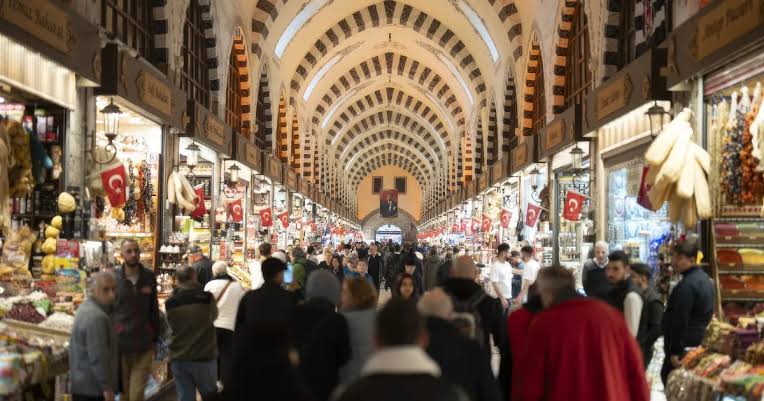


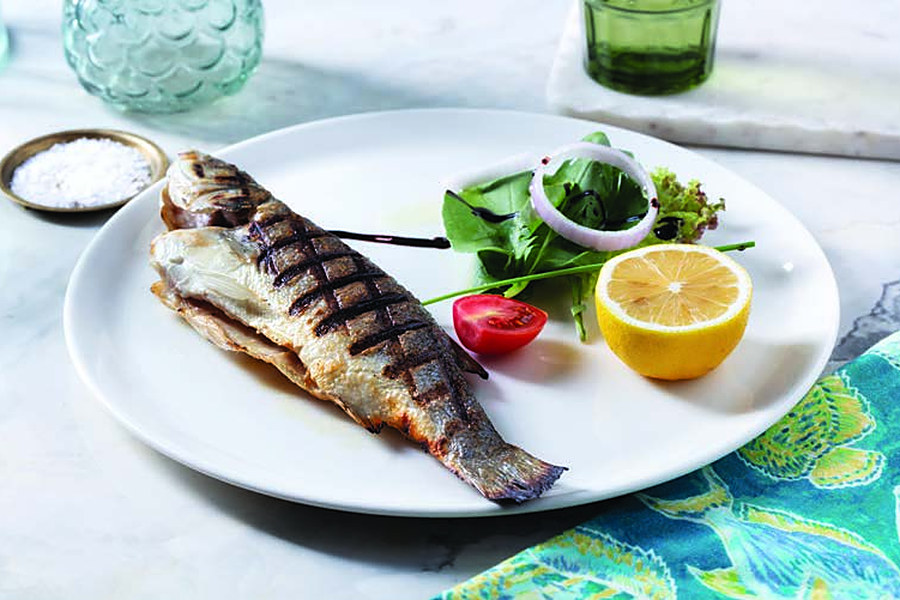
When a table is set in Istanbul, one of the first ingredients that comes to mind has always been fish. In a city built between two seas this was inevitable: the currents of the Bosphorus, the shallow waters of the Marmara and the seasonal migrations shaped the calendar of Istanbul’s kitchens for centuries. The seafood section on the menu of Deraliye Restaurant in Sultanahmet continues that inheritance. This article looks at the place of fish in Ottoman cuisine, the cooking methods used in the palace kitchen, and the dishes on Deraliye’s own fish menu, one plate at a time.
Istanbul and Fish: The Bosphorus on the Table
Throughout its history Istanbul has been a city defined by fish. The net-laden boats of the Golden Horn in the Byzantine era, the fish weirs off Sarayburnu in Ottoman times and the fishing villages along the Bosphorus all sat at the centre of how the city fed itself. Standing on the migration route that runs from the Marmara to the Black Sea, this city could bring a different species to the table in every month of the year.
Sea bass, sea bream, bonito, bluefish, horse mackerel and anchovy each marked a different season. As we explained in our article on Byzantine cuisine and food tradition, the city’s relationship with seafood reaches back far beyond the Ottoman period. The Ottomans inherited that accumulated knowledge and reshaped it with their own approach to spices, grains and presentation.
Eating fish today in Sultanahmet, in the heart of the historic peninsula, is the last link in that long chain. The fish on Deraliye’s menu is cooked according to the palace kitchen’s principle of restraint: the point is not to conceal the ingredient but to reveal it.
The Place of Fish in Ottoman Palace Cuisine
Ottoman palace cuisine is usually associated with meat, yet fish appears regularly in the palace ledgers. In the kitchen records of Topkapi Palace, seafood purchases rise noticeably during periods of fasting and through the summer months. The palace maintained its own fish weirs, and the day’s catch from the Bosphorus went straight to the kitchen.
The cooking methods available to the palace kitchen were limited but clearly defined: grilling, baking, cooking in a salt crust, and steaming in paper or dough. What these methods share is that the fish is cooked without losing its own moisture. As we detailed in our article on Ottoman palace cuisine and culinary culture, palace cooks treated minimal intervention as a measure of skill.
Spicing was equally measured. The cinnamon, cumin and pomegranate molasses applied so generously to meat give way to lemon, dill, coriander and olive oil where fish is concerned. That choice is not accidental: the flesh is delicate, and heavy spice would simply bury it.
Sea Bass in Salt: Cooked Inside a Crust
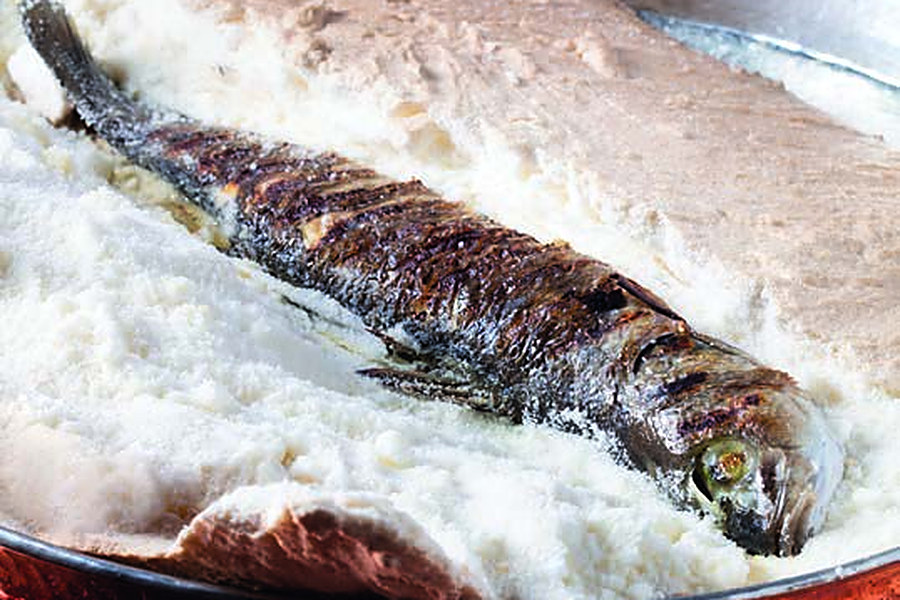
Listed under “Great Dishes of the Palace”, the sea bass or sea bream in salt is a plate for two and the most theatrical fish preparation in the kitchen. The whole fish is wrapped in a special paper, covered completely with a thick mixture of salt bound with egg white, and sent to the oven.
The crust hardens as it bakes and turns into an oven around the fish. Steam is trapped inside and the fish cooks in its own moisture; contrary to what many guests expect, the salt does not penetrate the flesh at all — it simply distributes the heat evenly. When the crust is cracked open at the table, the steam that rises explains why this dish is treated as a small performance.
Cooking in a salt crust is not unique to Ottoman cuisine, but it fits the palace principle of “cook while protecting the ingredient” perfectly. Because this plate is priced seasonally, it is worth asking the service team before ordering; the size and species of the fish change from day to day.
Grilled Sea Bass and Grilled Sea Bream: Mastery in Simplicity
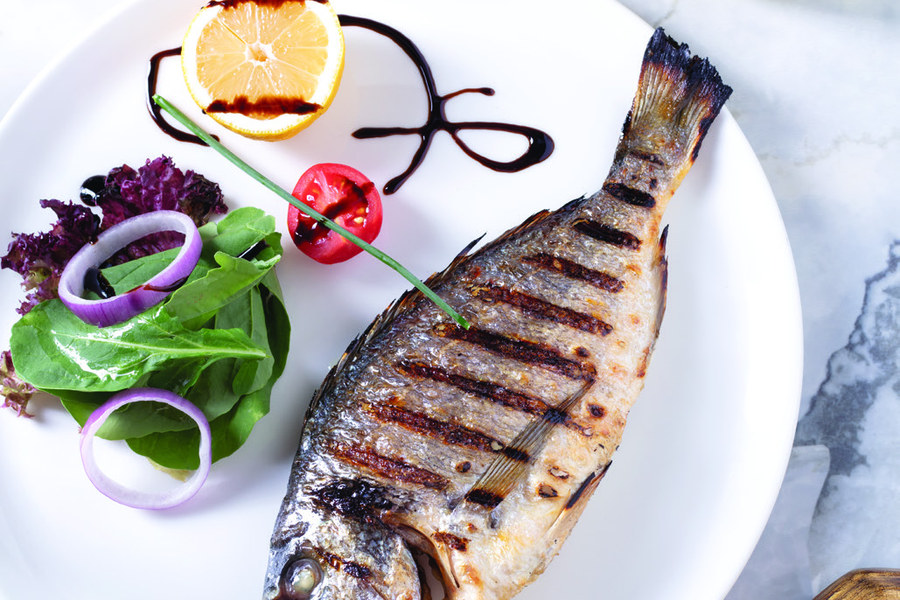
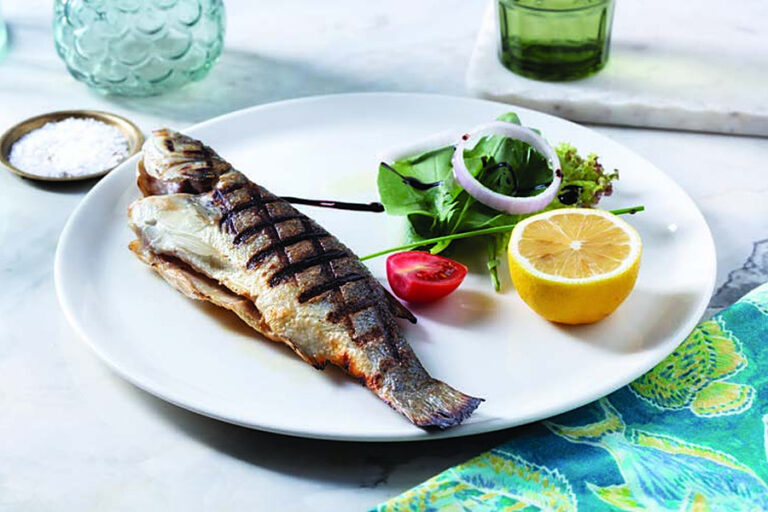
A kitchen’s real level with fish is measured on the grill. The grilled sea bass and grilled sea bream on Deraliye’s menu are cooked over charcoal and served with seasonal greens. There are no sauces or heavy garnishes on the plate; olive oil, lemon and salt are enough.
Two technical details sit behind that simplicity. The first is heat management: the charcoal must be hot enough to seal the skin without sticking, yet not so fierce that the flesh dries out. The second is timing; a 300-gram sea bass allows a margin of error measured in a couple of minutes.
The difference between the two species is felt at the table as well. Sea bass has whiter, more neutral flesh, while sea bream is oilier and more aromatic. After a rich meze spread, sea bass makes the lighter main course, while sea bream suits guests looking for something fuller. As our round-up of the dishes our guests prefer the most shows, grilled fish comes to the fore especially in the summer months.
Sea Bass on Paper: Aroma Kept Inside the Steam
Sea bass on paper is a modern reading of the Ottoman tradition of cooking in a sealed vessel. The fillet is wrapped in paper together with mastic, coriander, lemon, dill, seasonal vegetables and almonds, then baked. The scent released when the paper is opened matters as much as the plate itself.
In this method the fish cooks without absorbing any added fat; the juices of the vegetables and the acidity of the lemon perfume the steam. Mastic resin lends the dish a light resinous background that belongs to both Aegean and Ottoman cooking. It shares its logic with sealed-pot dishes such as testi kebab: no steam escapes, so no aroma is lost.
For guests looking for a light and healthy option, sea bass on paper is one of the most balanced plates on the menu. Choosing a seasonal salad instead of rice alongside it makes for a genuinely light dinner.
Kulbasti Salmon: A Modern Classic over Charcoal
Salmon is not a historical ingredient of Ottoman cuisine, yet it finds a place on Deraliye’s menu through the kulbasti technique. Kulbasti means cooking meat or a fish fillet directly over glowing embers, quickly and at high heat. Salmon’s fat content suits the method perfectly: the outside caramelises while the inside stays moist.
At the table, kulbasti salmon is the fuller, richer alternative to grilled sea bass. It offers a middle path for guests who do not want the weight of red meat but find white fish too light. It is served with seasonal greens and dill, with no sauce beyond olive oil and lemon.
Seafood Starters: Octopus and Shrimp
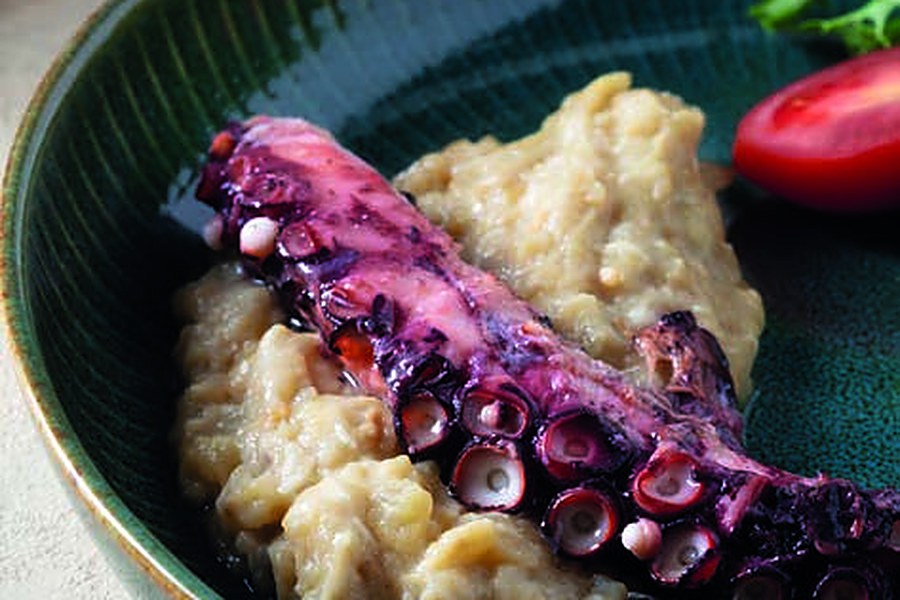
Seafood at Deraliye is not confined to the main courses; it appears among the hot starters as well. Grilled octopus is served as a whole arm over charred aubergine puree. Simmering the octopus slowly at low temperature and then sealing it on the grill produces both tenderness and caramelised edges.
Shrimp casserole with garlic sauce is cooked in a pan with plenty of garlic, shallots and parsley. Arriving in a silver dish, it is usually the first plate on the table to disappear alongside bread. There is also a shrimp salad with pomegranate grains and arugula, in which shrimp sauteed in butter meets rocket, orange and pomegranate seeds.
The piruhi with seafood included in the Sultan Menu belongs to this section too: hand-rolled dough filled with seasonal fish and spices. It is one of the rarer examples of the relationship between pastry and fish in Ottoman cooking.
What Goes Alongside Fish?
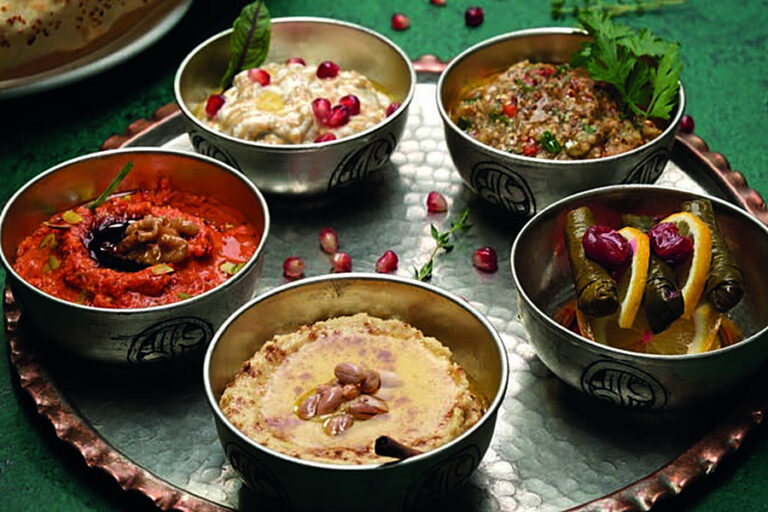
Everything placed next to fish should stay out of its way. That is why at Deraliye the fish plates are accompanied by seasonal greens and lemon rather than heavy garnishes. On the meze side, fresher options come forward instead of tahini-heavy or charred plates: tabbule, shepherd salad and acili ezme.
The classic drink pairing is raki; aniseed and white-fleshed fish have been mentioned together for centuries. For an alcohol-free alternative, house-made lemonade and fresh pomegranate juice both work well. The sherbet varieties we detailed in our article on what to drink in Istanbul pair particularly well with the spiced plates.
Season and Fish: What to Eat and When
Apart from sea bass, sea bream and salmon, which are available all year, the whole fish cooked in salt changes with the season and the day. Broadly speaking, autumn and winter belong to oily species on an Istanbul table, while spring and summer suit lighter, white-fleshed fish.
- Spring and summer: grilled sea bass and sea bream, sea bass on paper, shrimp salad.
- Autumn: kulbasti salmon, whole fish baked in salt, grilled octopus.
- Winter: oven and sealed-vessel dishes; hot seafood starters.
Choosing by season is a question of sustainability as much as flavour. As we noted in our list of iconic Turkish foods to eat in Istanbul, the city’s seafood culture has always followed the calendar.
Frequently Asked Questions
Does fish baked in salt taste salty?
No. The salt crust touches the skin but never enters the flesh; its role is to distribute heat evenly and keep the moisture inside. The crust is cracked at the table and the fish is filleted before serving.
Do I need to order fish in advance?
Grilled sea bass, sea bream, kulbasti salmon and sea bass on paper are available every day. The whole fish in salt is a plate for two, priced seasonally, and we recommend mentioning it when you make your reservation.
Is there a suitable option for children?
Sea bass on paper and kulbasti salmon, both served boneless, are the most suitable choices for children. The spicing is deliberately restrained.
Is the fish menu part of the Ottoman tasting menu?
The Sultan Menu includes piruhi with seafood, but its main courses are goose kebab and ali nazik kebab. Fish dishes are ordered separately from the a la carte section.
Conclusion: A Table Between Two Seas
Eating fish in Istanbul is not merely a menu preference; it is a relationship with the geography of the city. Ottoman palace cuisine approached that relationship with restraint: little intervention, correct heat, fresh produce. The seafood section at Deraliye Restaurant stands on the same line.
If you would like to watch a salt crust cracked open at the table, catch the scent of coriander as the paper is unwrapped, or eat a sea bass sealed over charcoal with nothing more than lemon, our table in Sultanahmet is ready. When you book, remember to ask about the catch of the day.